
As autonomous AI agents move from experimental sandboxes to production enterprise workflows, the security paradigm is shifting. It's no longer just about protecting the model; it's about securing the entire Agentic Security Stack.
Agentic systems introduce new attack surfaces because they have agency—the ability to plan, execute tool calls, and access external environments. Without proper guardrails, an agent's reasoning loop can be hijacked by malicious input, leading to unauthorized actions, data exfiltration, or total system compromise.
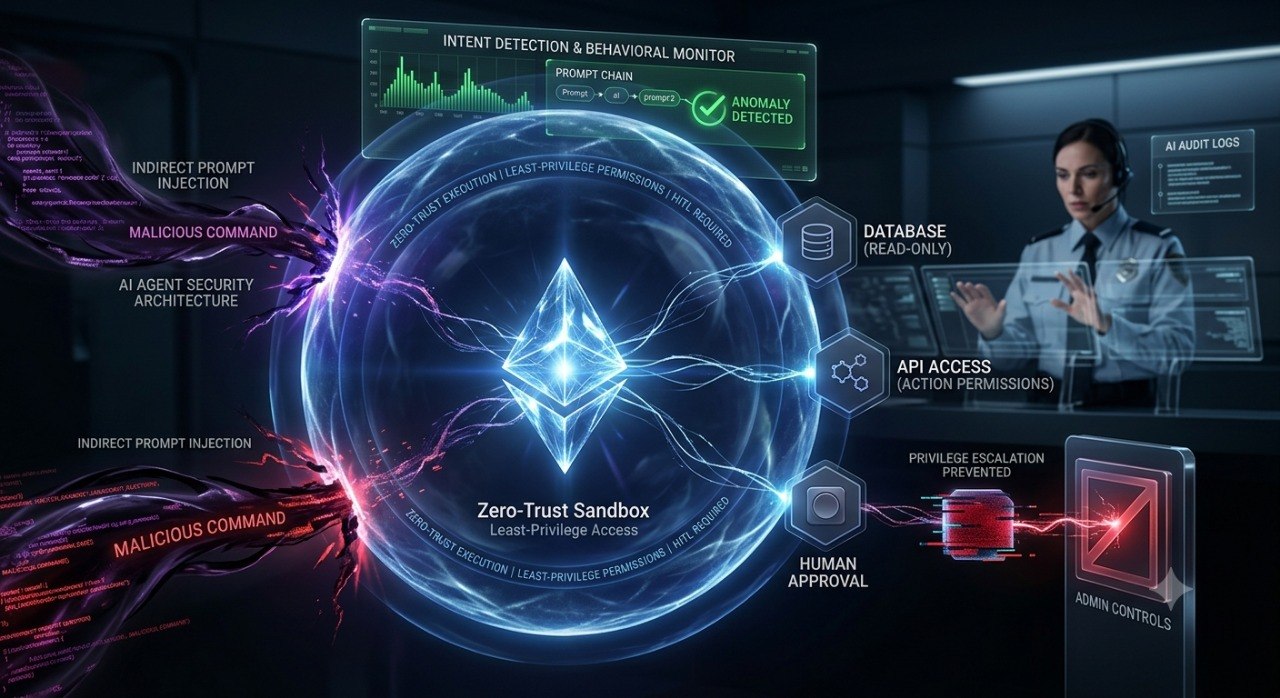
The Three Layers of Agentic Risk
1. Untrusted Context & Prompt Injection
Agents often consume data from the open web, emails, or user-uploaded files. If an agent is fed a prompt injection payload disguised as legitimate data, it can divert its objective or bypass instructions.
2. Hijacked Reasoning Loops
Once the context is poisoned, the agent’s internal reasoning loop—its process of breaking down goals into sub-tasks—can be manipulated to generate plans that the developer never intended.
3. Privileged Tool Exploitation
This is the most critical layer. If an agent has permissions to write to your database, trigger webhooks, or manage your infrastructure, an attacker can use the hijacked agent to perform these actions with the agent's full privileges.
Defense-in-Depth Strategy
To protect your agentic stack, you must implement a defense-in-depth architecture:
- Pre-Execution Policy Inspection: Implement an interception layer that validates every tool call request against a strict policy before the agent executes it.
- Ephemeral Sandbox Isolation: Always run tool calls and reasoning tasks within minimal, isolated environments (like ephemeral containers or restricted sub-agents) with no persistence.
- Human-in-the-Loop: For destructive operations—like database writes, production deployments, or mass data deletion—require an explicit human approval step that the agent cannot circumvent.
- Least-Privilege Scoping: Provide agents only the specific API keys or read/write scopes required for their immediate task.
Security in the age of autonomous agents is proactive, not reactive. By architecting these guardrails into your workflow today, you ensure that as your agents gain more power, your systems remain secure.